

Puppy Socialization Window: Why the First 16 Weeks Matter
Posted by Sierra Pet Meds on May 02, 2026
Puppy socialization is easiest—and often most effective—when you start early. Those early weeks are a time-limited learning phase when your pup’s brain is primed to accept new people, places, sounds, and handling as “normal.” Understanding the puppy socialization window helps you build confidence now and reduce the odds of fear-based behavior later.
Important nuance: the most sensitive period for socialization is commonly described as roughly 3 to 14–16 weeks, and it varies by individual. That means 16 weeks isn’t a hard cutoff—it’s a reminder to prioritize gentle, positive experiences early while continuing to build skills throughout adolescence.
Why the first 16 weeks matter
In the early months, puppies form fast, lasting opinions about what’s safe. During this period, gentle exposure to everyday life teaches your pup that novelty is normal rather than scary. After the most sensitive window closes, learning still happens—but it often takes more repetition, tighter management, and more careful setups to get the same calm response.
Think of the socialization window as an “acceptance stage.” Your goal isn’t to create a dog who loves every interaction; it’s to create a dog who can recover quickly from surprises, settle in new environments, and handle routine care without stress.
Good early social development also supports practical health routines. A puppy who’s comfortable with being touched, checked, and calmly restrained is often easier to groom and examine—making everyday care less stressful for everyone.
What to practice during early social development
Effective puppy socialization focuses on quality exposures—not quantity. Aim for short, positive sessions where your pup stays under threshold (curious or neutral, not overwhelmed). End on a good note and repeat often.
Use a simple “people, places, handling, sounds” framework:
- People: different ages, heights, voices, and movement styles (calm greetings only).
- Places: car rides, quiet storefronts, a friend’s home, a calm park perimeter (observe at a distance if needed).
- Handling: paws, ears, mouth, collar grabs, gentle restraint, brushing, nail-touch practice.
- Sounds and sights: vacuum, doorbell, traffic, skateboards, umbrellas, hats, rolling bins (pair with treats).
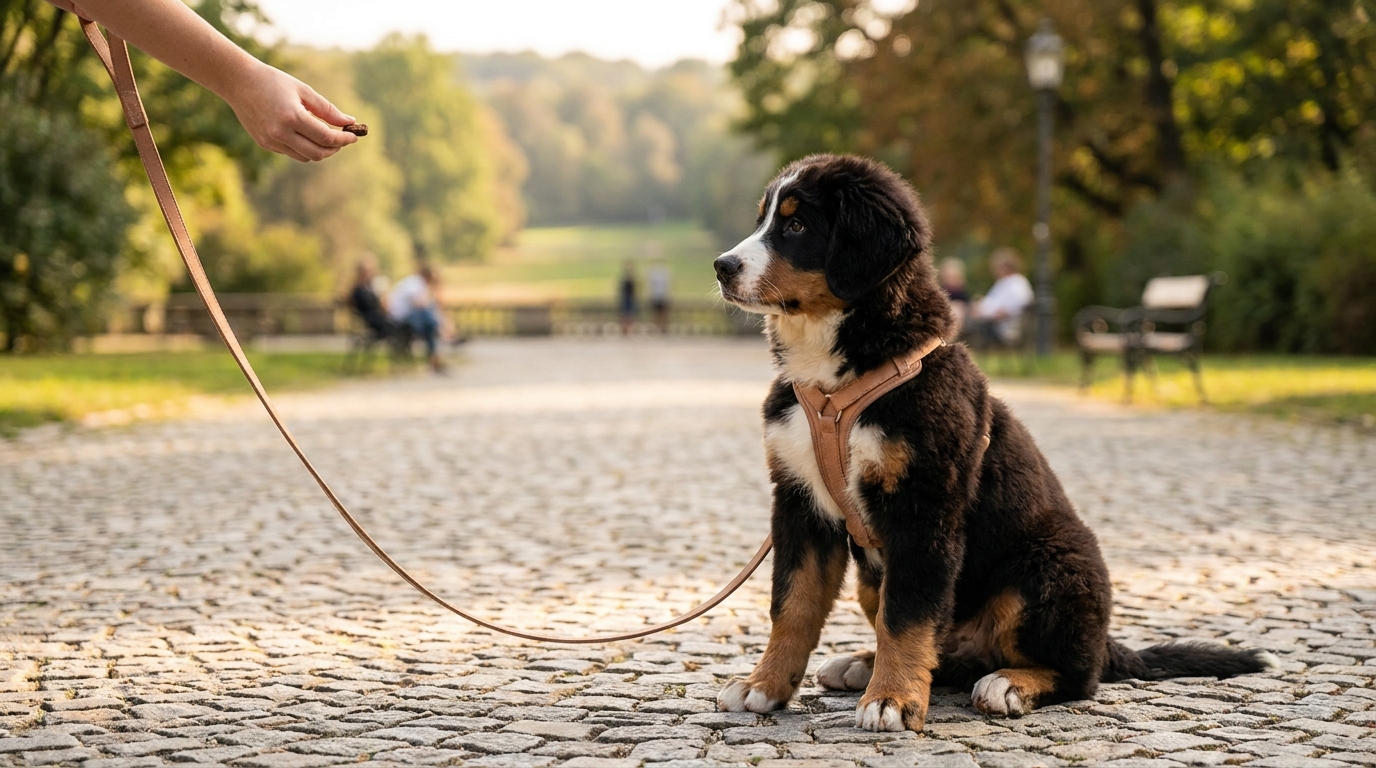
Keep the setup simple: a few soft treats, a treat pouch, and a well-fitted collar or harness make it easier to reward calm behavior in the moment. If you’re building a starter kit, your puppy supplies checklist can help you stay consistent without overbuying.
How to socialize a puppy safely
To socialize a puppy safely, prioritize controlled, low-risk setups over unpredictable “free-for-alls.” Choose calm, healthy adult dogs you trust, and keep interactions brief with frequent breaks. Your puppy should be able to disengage, sniff, and reset—not feel trapped.
Health note: socialization and disease prevention both matter. Talk with your veterinarian about your puppy’s vaccine schedule and risk factors so you can choose appropriate outings. When risk is higher, favor strategies like carrying your puppy in public, using clean low-traffic areas, avoiding unknown dogs, and arranging play only with dogs you know are healthy and vaccinated.
Use these safety rules to guide every outing:
- Distance is your friend: if your puppy freezes, hides, or won’t take treats, back up until they relax.
- Let your puppy choose: avoid forced petting; ask people to offer a treat and allow the pup to approach.
- Pick calm, low-traffic environments: focus on observation and confidence building, not chaotic greetings.
- Reward calm behavior: mark and treat for looking at something new and staying relaxed.
Quick tip: Try “treat for the trigger”: the moment your puppy notices a new sound, person, or dog, feed a small treat. This builds a positive association without needing close contact.
As your puppy’s world expands, make daily routines easy to maintain. Simple, handling-friendly gear from puppy supplies can support calm practice like gentle leash skills, cooperative collar grabs, and comfortable downtime.
Common mistakes that can backfire
Social development can go sideways when “more” becomes “too much.” Flooding—overexposing a puppy to scary or intense situations—can create lasting sensitivity. The goal is calm curiosity, not endurance.
Watch out for these common missteps:
- Overly busy dog meetups: unbalanced play can teach bullying, fear, or frantic arousal.
- Letting strangers scoop your puppy up: being lifted or hugged by unfamiliar people can feel threatening.
- Punishing fear signals: growling, backing away, or hiding are communication—punishment can suppress warnings and increase risk.
- Ignoring recovery time: puppies need naps; an overtired pup is more likely to react poorly.
A practical rule: if your puppy has three “startles” in one session (a sudden noise, a fast approach, a surprise touch), end the outing and decompress. Quiet sniffing, a chew at home, and sleep are productive training, too.
A simple week-by-week prep checklist
You don’t need a perfect plan—you need a repeatable one. Use this checklist to guide the early socialization window without overwhelming your pup or your calendar. Adjust pace based on your puppy’s confidence and always prioritize relaxed body language.
- Weeks 8–10: handling games daily (paws/ears/mouth), gentle grooming, short car rides, meet 2–3 calm people, practice “touch” and name response.
- Weeks 10–12: observe the world from a safe distance (bikes, strollers, carts), brief visits to a friend’s home, start short alone-time practice, introduce surfaces (grass, gravel, rubber mats).
- Weeks 12–14: controlled dog interactions with one well-mannered dog, practice polite greetings, add new sounds (doorbell, blender) paired with treats, begin calm crate or pen routines.
- Weeks 14–16: longer calm outings, gentle “mock exams” (hold still for 3–5 seconds), brief public settling on a mat, practice cooperative collar/harness handling.
Keep sessions short—often 3–10 minutes is enough. Track wins (soft eyes, loose posture, takes treats, chooses to re-engage) instead of chasing milestones like “met 100 people.”
When fear is escalating: what to do next
Some puppies move from mild caution to bigger reactions if they’re pushed too fast—or if they’re genetically more sensitive. If you notice fear getting stronger over time, prioritize safety and change the plan.
- Stop the interaction early: end the session before your puppy is panicking (barking, lunging, thrashing, or shutting down).
- Increase distance: create space until your puppy can eat treats and orient back to you.
- Lower the intensity: swap close greetings for calm observing, or reduce the volume/speed of the trigger.
- Build predictable routines: practice easy wins at home (handling for treats, short leash walks, calm mat time) so your puppy’s baseline confidence improves.
- Get professional support: if your puppy is frequently overwhelmed, is growling or snapping, or is unable to recover quickly, contact your veterinarian and consider a certified positive-reinforcement trainer or a veterinary behaviorist for a tailored plan.
Frequently Asked Questions
What if I missed the first 16 weeks?
You can still build confidence, but it may take more time and more careful steps. Start with low-intensity exposures, use distance and treats, and focus on steady progress rather than trying to catch up quickly. Many dogs continue to improve with thoughtful training well beyond puppyhood.
How do I know if my puppy is overwhelmed?
Common signs include freezing, tucked tail, lip licking, yawning, refusing treats, trying to hide, or frantic jumping and biting. If you see these, increase distance, reduce intensity, and give your puppy a break.
Is puppy socialization the same as letting my puppy meet every dog?
No—healthy social development is about learning to feel safe and calm around the world, not greeting everyone. Many puppies do best learning to observe politely and disengage, with only a few carefully chosen dog friends.
If you want to set up calmer practice sessions at home, start with simple basics from our puppy supplies and build a routine you can stick to. If you’re unsure what’s appropriate for your puppy’s age and risk level, ask your veterinarian at your next visit.
Sources and further reading
- American Veterinary Society of Animal Behavior (AVSAB). Position Statements (see “Puppy Socialization,” 2008).
- American Animal Hospital Association (AAHA). AAHA Guidelines (see “Canine Life Stage Guidelines,” 2019).